How Compliance Requirements Shape the Rollout of New Game Releases in Regulated Mobile Casino Environments
Henrik Meier · Nov 18, 2026
How Compliance Requirements Shape the Rollout of New Game Releases in Regulated Mobile Casino Environments
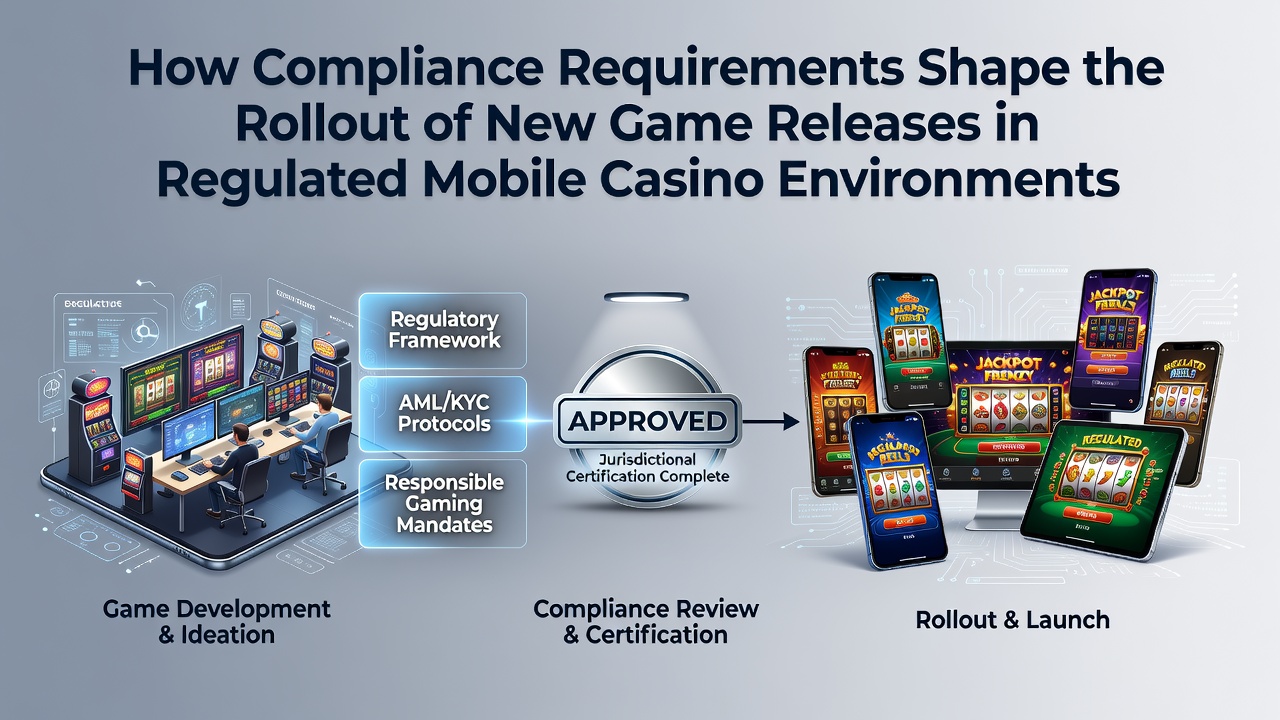
Regulated mobile casino platforms operate under layered compliance structures that directly influence the pace at which new game titles reach users, and these frameworks require extensive pre-release validation across technical, financial, and player-protection dimensions. Developers submit each title to independent testing laboratories that verify random number generator integrity, return-to-player percentages, and integration with backend monitoring systems, processes that routinely stretch several months from initial submission to final approval.
Certification Timelines and Technical Validation
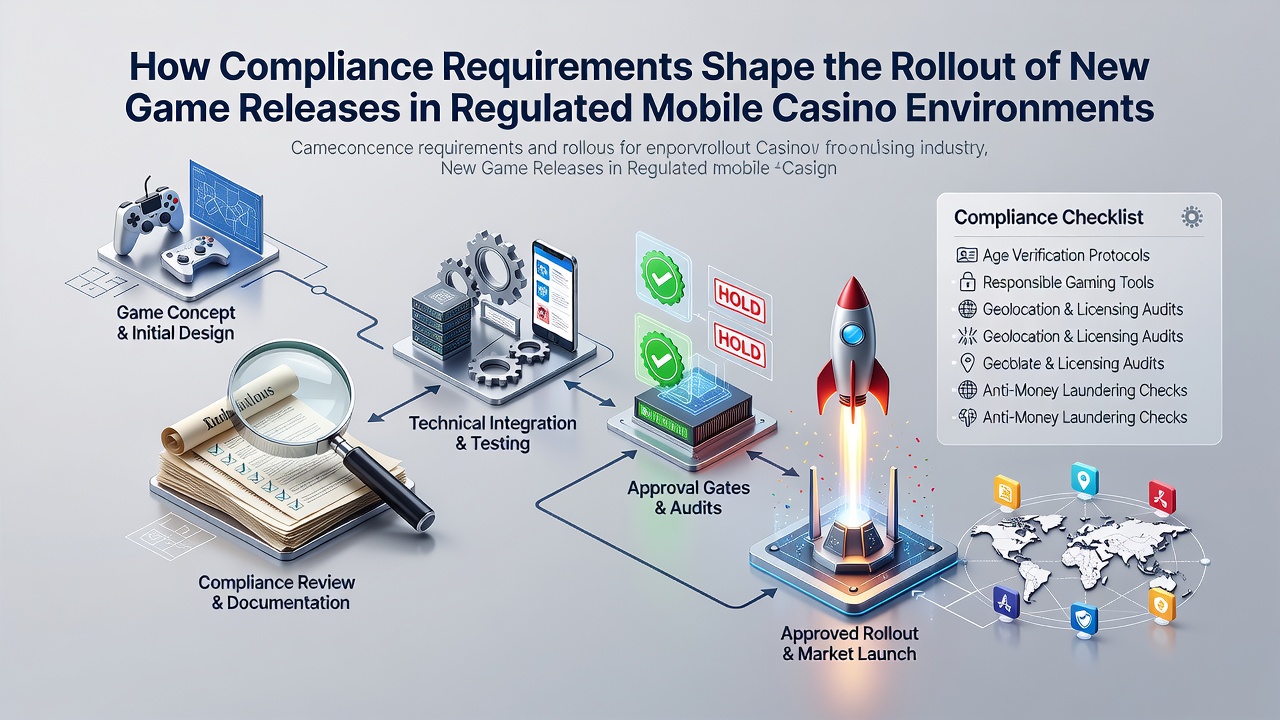
Testing protocols in markets such as New Jersey and Pennsylvania mandate sequential reviews that include source-code audits, mathematical modeling checks, and simulated live-environment stress tests before any game can appear in an operator’s catalog. Data from state regulatory filings show that average certification cycles for slot titles have lengthened from 45 days in 2023 to 72 days by late 2025, driven by expanded requirements for real-time reporting modules that feed directly into centralized regulatory dashboards. Operators coordinate release calendars around these fixed validation windows, often staggering submissions so that multiple titles move through parallel review tracks without creating bottlenecks at the labs.
Responsible Gambling Integration Mandates
Every new release must embed jurisdiction-specific responsible gambling controls, ranging from session-limit prompts to deposit caps that activate at the account level rather than the game level. In Ontario, the Alcohol and Gaming Commission requires that these tools appear in the same user interface layer as the game itself, which forces developers to redesign menu structures and notification flows for each regulatory environment. Pennsylvania’s gaming control documentation similarly specifies that self-exclusion lists must sync within 15 seconds of any game launch, a performance threshold that necessitates additional backend testing cycles after the core game build is complete.
Payment and Data Security Overlays
Compliance extends into payment processing layers, where new games must interface with approved financial rails that carry their own certification histories. Australian regulators, through the National Consumer Protection Framework, require transaction logs to capture every in-game purchase with timestamp granularity down to the millisecond, compelling studios to modify existing transaction APIs before submission. These modifications trigger fresh penetration tests and encryption audits, adding another three to five weeks to the overall timeline. Observers note that studios working across multiple continents maintain separate code branches precisely because encryption standards and logging formats differ sharply between North American and Asia-Pacific jurisdictions.
Regional Divergence in Approval Pathways
Market-specific rules create distinct release cadences. Michigan’s regulatory body requires a 30-day public comment period for any game that introduces novel bonus mechanics, while Delaware’s framework focuses on integration testing with teh state’s central monitoring system before granting final sign-off. These differences mean that a single title can launch in one jurisdiction months ahead of another, even when the underlying game engine remains identical. Research reports from the International Association of Gaming Regulators indicate that 68 percent of operators now maintain dedicated compliance teams whose sole function is to track rule changes and pre-clear feature sets across active licenses.
November 2026 Regulatory Adjustments
Updates issued in November 2026 by several North American regulators introduced mandatory real-time anomaly detection for bonus round outcomes, requiring operators to retrofit existing titles and incorporate the same modules into all pending releases. The change extended average approval times by an estimated 18 days across the affected markets, prompting several major studios to delay planned holiday-season launches until the first quarter of 2027. Those adjustments also mandated that any new game using player-data personalization engines must undergo an additional algorithmic fairness review, a step previously reserved for marketing tools rather than core gameplay features.
Impact on Development Pipelines
Studios respond to these constraints by front-loading compliance work during the design phase, embedding configurable modules for limits, reporting, and encryption that can be toggled per jurisdiction. This modular approach reduces last-minute rework, yet it still demands extensive regression testing each time a regulatory body revises its technical standards. Figures released by the New Jersey Division of Gaming Enforcement reveal that titles incorporating live-dealer hybrids encounter the longest lead times because they must satisfy both gaming and broadcast compliance criteria simultaneously.
Conclusion
Compliance requirements continue to function as primary gatekeepers that determine release sequencing in regulated mobile casino environments, and operators allocate substantial resources to align game development schedules with certification calendars across multiple jurisdictions. The interplay between technical validation, responsible gambling mandates, payment security rules, and region-specific reporting obligations creates predictable yet extended timelines that studios and platforms must navigate methodically. As regulatory frameworks evolve, the same structured processes that lengthen rollout periods also provide the documented assurance that each new title meets established standards for fairness, security, and player protection before it becomes available to users.